2026 Program
See the full program for the sixth edition of the Festival Cap Rocat.
Friday, July 31, 2026
Opera Gala
Cast
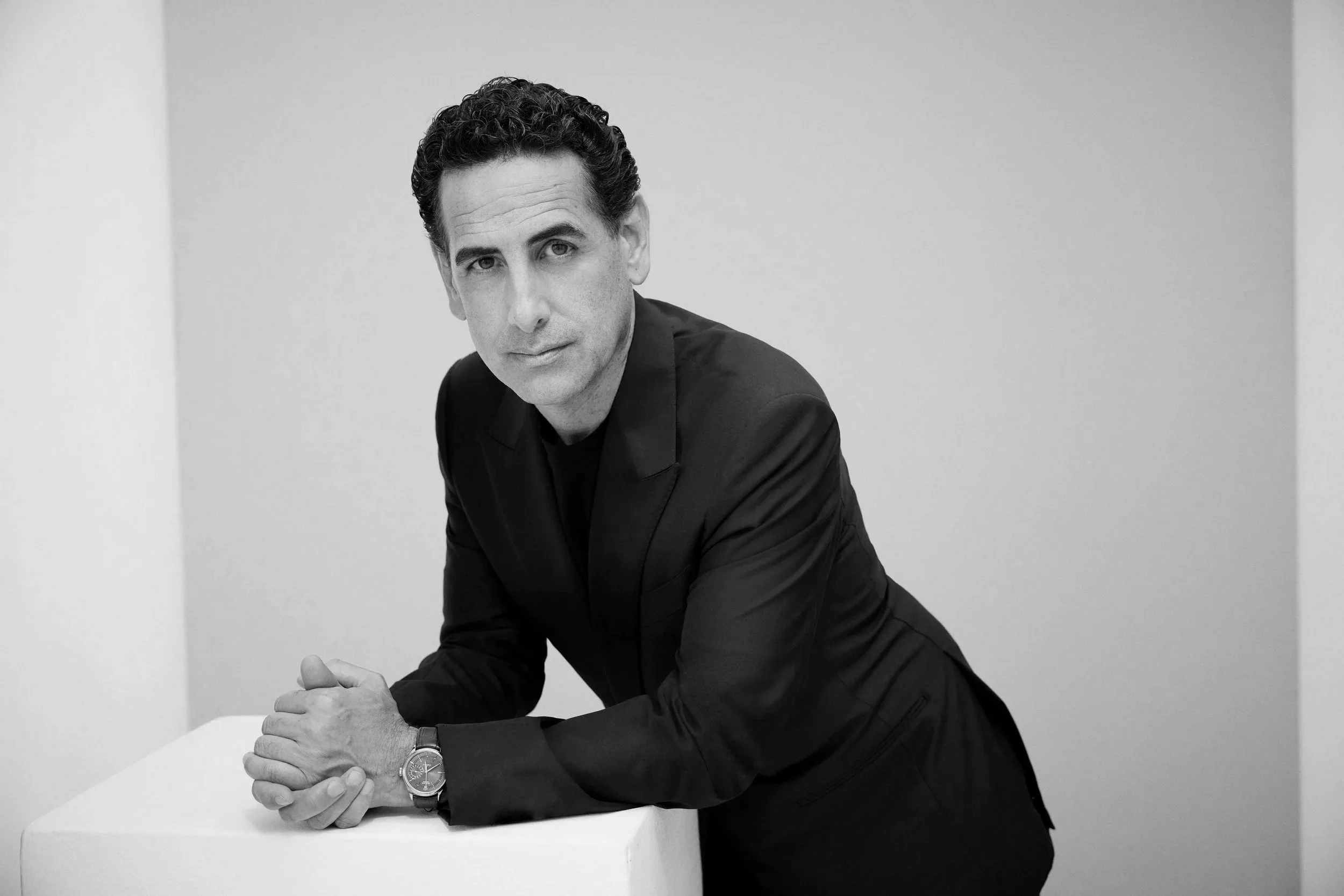
Tenor Juan Diego Flórez
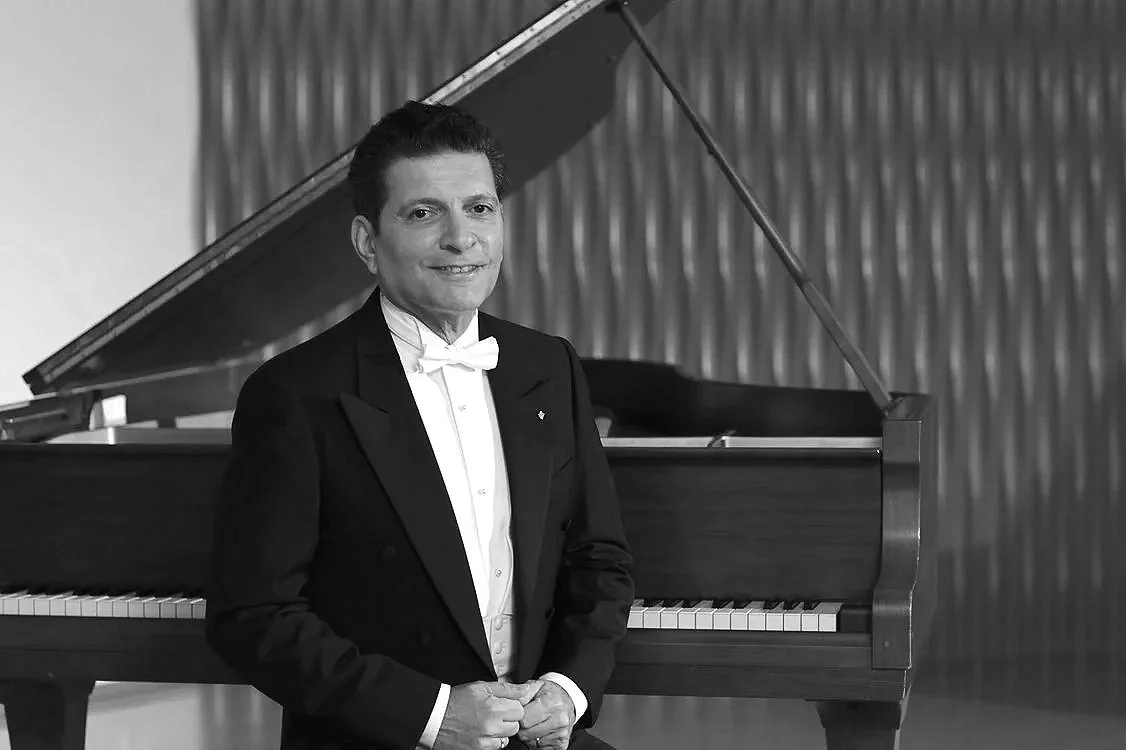
Pianist Vincenzo Scalera
“Melancholy, gentle nymph”
“O wandering moon that casts a silvery glow“
“The Memory”
Vincenzo Bellini
“The Distance”
“The Exile”
“Une bagatelle” —from Péchés de vieillesse ( for solo piano)
Gioachino Rossini
“Ah! Remember, O beautiful Irene”
Gaetano Donizetti
“Yes, I swear I’ll find her” —from La cenerentola
Gioachino Rossini
INTERMEDIATE
“Beautiful in Love” —from The Last Romantic
Reveriano Soutullo and Juan Vert
“Play on, my little guitar” —from *The Little Guitar*
Agustín Pérez Soriano
“Here’s the one who’s got it all… The Moorish king himself” —from The Joy of the Battalion
José Serrano
Mazurka Glissando —for solo piano
Ernesto Lecuona
“Why wake me up?” —from Werther
Jules Massenet
“Love!… Ah, rise, sun” —from Romeo and Juliet
Charles Gounod
“Berceuse” —by Jocelyn ( arrangement for solo piano)
Benjamin Godard
-
THE ART OF MELODY
From Bel Canto to Zarzuela: A Journey Through European Vocal Romanticism
The nineteenth century was, par excellence, the century of the voice. Never before had Western music attached such importance to singing as the primary vehicle for emotional expression. From the theaters of Naples and Milan to the Parisian salons, from French opera to Spanish zarzuela, the human voice became the centerpiece of a new aesthetic based on the exaltation of the individual, emotional intensity, and the pursuit of melodic beauty.
Tonight’s program takes us on a journey through this extraordinary musical landscape via some of its most representative composers. More than just a succession of arias and songs, it is a journey through different conceptions of romantic lyricism, from the aristocratic elegance of bel canto to the theatrical realism of the fin de siècle.
Bellini and the Invention of the Infinite Melody
Few composers have had such a profound influence on the history of melody as Vincenzo Bellini (1801–1835). Admired by Wagner, Chopin, and Verdi, Bellini elevated the vocal line to an almost abstract dimension, built on broad melodic arcs and a striking harmonic economy.
The songs collected in this first volume reveal a lesser-known facet of the Sicilian composer. Unlike the grand operatic scenes from *Norma* or *I Puritani*, these pieces belong to the private realm of the romantic salon, where expression becomes more intimate and focused. In them we already find what musicologist Friedrich Lippmann defined as the “poetics of suspension”: melodies that seem to halt time and transform the very act of breathing into musical matter.
It is no coincidence that Chopin deeply admired these works. Both composers shared a conception of melody based on flexible phrasing and a constant pursuit of sonic beauty as the supreme expressive value.
Rossini Beyond the Theater
Gioachino Rossini (1792–1868) is often associated with the theatrical brilliance of *Il barbiere di Siviglia* or *Guillaume Tell*. However, after retiring prematurely from the opera scene at the age of thirty-seven, Rossini engaged in an intense private compositional career in Paris.
The songs included in the program belong to that later, refined, and deeply personal world. In them, we find a vocal style that is far more introspective than that of his operas, characterized by a harmonic sensibility that foreshadows the style of the European salon of the second half of the 19th century.
The inclusion of a piece from the famous *Péchés de vieillesse* (“Sins of Old Age”) offers a glimpse into one of the most unique chapters in the history of music. Under ironic and seemingly lighthearted titles, Rossini experimented with harmonic and pianistic techniques of surprising modernity, creating an aesthetic laboratory later admired by composers as diverse as Saint-Saëns, Fauré, and Poulenc.
The first part concludes with “Sì, ritrovarla io giuro” from *La Cenerentola*, the quintessential example of the Rossinian cabaletta. Its structure follows the formal model that would dominate Italian opera for decades: a fast-paced section designed to convey the character’s emotional resolve through varied repetition, virtuosity, and irresistible rhythmic energy.
Donizetti and the Height of Bel Canto
Positioned between Rossini and Verdi, Gaetano Donizetti (1797–1848) represents the culmination of the bel canto style. His body of work, comprising nearly seventy operas, constitutes one of the most extensive repertoires of the 19th century.
In Donizetti, ornamentation ceases to be a mere decorative element and becomes a dramatic tool. The vocal line directly reflects the character’s psychological states, thus foreshadowing some of the transformations that would later lead to Verdi’s musical drama.
Verdi’s famous observation that Donizetti possessed “a natural gift for melody” finds one of its most eloquent expressions in pieces such as “Ah! Rammenta, o bella Irene.”
Zarzuela: Spanish Musical Identity
The second part of the recital introduces us to a uniquely Spanish art form: the zarzuela. Although its origins date back to the 17th century, it was during the last third of the 19th century and the first decades of the 20th century that it reached its peak.
Unlike Italian or French opera, zarzuela emerged as a genre rooted in everyday life and urban vernacular. It blends elements drawn from traditional song, regional dance, costumbrista theater, and the international trends of the time.
*Bella Enamorada de Soutullo y Vert* is one of the most refined examples of the so-called late Spanish lyric genre. Premiered in 1928, it reflects the influence of Italian verismo and Viennese operetta, blended with an unmistakably Spanish sensibility.
For their part, “Suena, guitarrico mío” and the romanza “La alegría del batallón” showcase two complementary facets of the genre: sentimental evocation and theatrical brilliance. Both illustrate zarzuela’s extraordinary ability to absorb international influences without ever losing its own identity.
France: The Triumph of Lyricism
The presence of Massenet and Gounod introduces one of the most refined vocal traditions of the 19th century. In contrast to the dramatic intensity of Italian opera, the French school emphasized elegant phrasing, harmonic subtlety, and a close relationship between music and text.
In Massenet’s *Pourquoi me réveiller?* from *Werther*, the composer reaches one of the high points of late Romanticism. Based on Goethe’s novel, the work transforms the protagonist’s inner conflict into a continuous melodic flow of extraordinary harmonic sophistication.
Romeo’s famous aria in Gounod’s *Roméo et Juliette*, by contrast, embodies the most luminous aspect of romantic love. Its melodic structure, supported by a transparent orchestration and delicately chromatic harmony, stands as one of the most perfect examples of French lyricism from the Second Empire.
Verdi and the Birth of Modern Drama
The tour concludes with Giuseppe Verdi (1813–1901), a central figure in Italian opera and one of the great architects of modern musical theater.
"La mia letizia infondere," from *I Lombardi alla prima crociata* (1843), dates from the so-called “years of galley,” a period during which Verdi consolidated the musical language that would later culminate in *Rigoletto*, *La Traviata*, and *Aida*. In this aria, we already find some of his hallmarks: the breadth of the melodic line, structural clarity, and a unique ability to transform singing into a direct expression of human character.
The choice of this piece to conclude the program is particularly significant. If Bellini represents the ideal of melodic beauty and Rossini theatrical virtuosity, Verdi embodies the definitive synthesis of music and drama—the culmination of a tradition that dominated European musical culture for more than a century.
—-
The history of 19th-century opera can be understood as the history of melody. From Bellini to Verdi, from Paris to Madrid, composers sought new ways to transform human emotion into song. This program celebrates precisely that quest: the quest for a beauty capable of transcending time through the voice.
Giuseppe Verdi
“To instill my joy... As an angel might” —from I Lombardi
Saturday, August 1, 2026
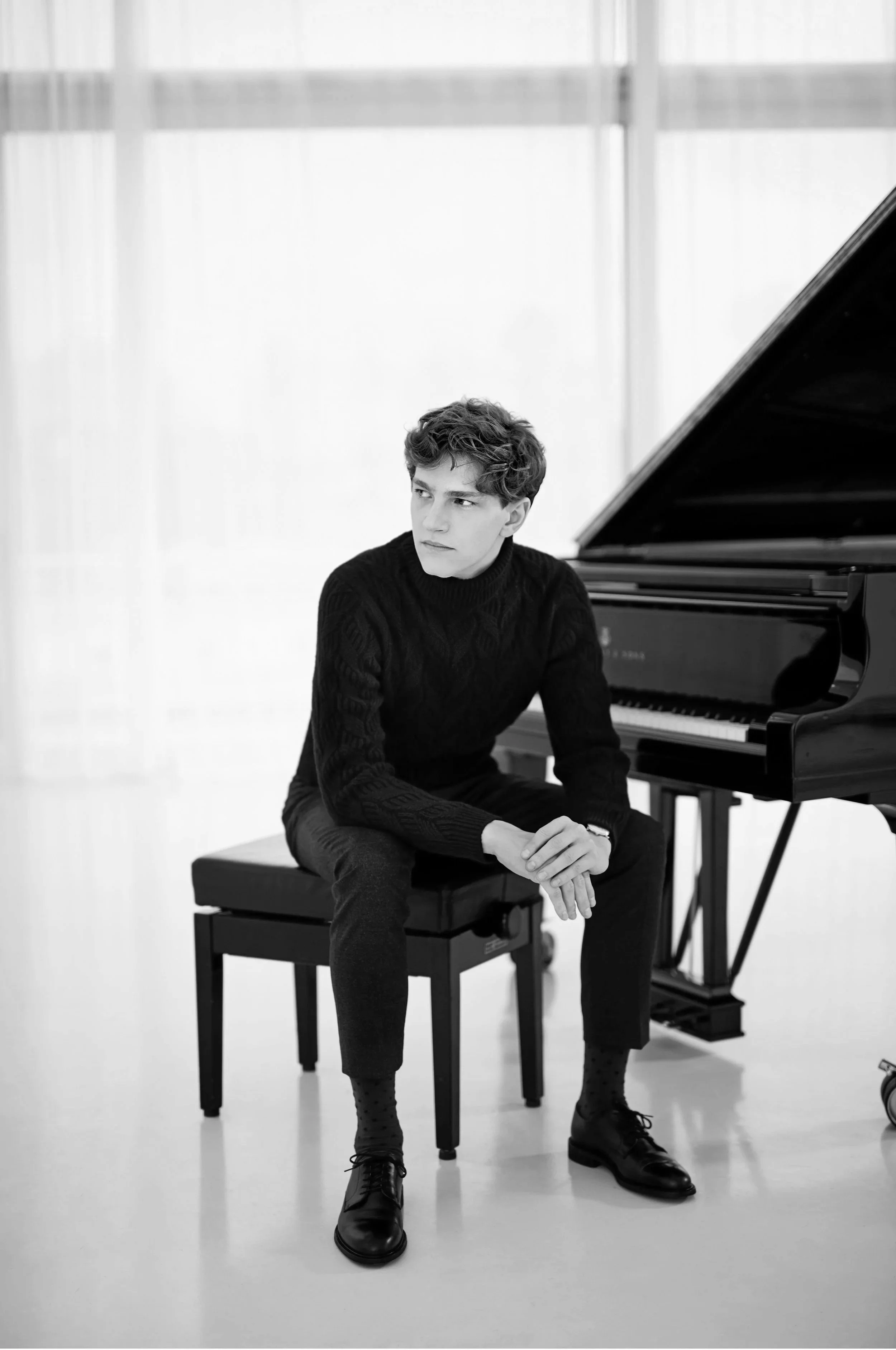
Jan Lisiecki
Piano recital
Three Czech Dances —H. 154
I. Okročák
II. Dupák
III. Polka
Bohuslav Martinů (1890–1959)
Spanish Dance —Nos. 2 & 1 (from *La vida breve*)
Manuel de Falla (1876–1946)
Four Polish Dances —M60
Mazurka. Tempo di Mazurka, animato
Polonaise. Moderato. Festive, pompous
Krakowiak. Allegretto, graceful
Oberek. Vivace and agitato
Karol Szymanowski (1882–1937)
16 German Dances —D. 783
Franz Schubert (1797–1828)
Romanian Folk Dances —Op. 56
I. Jocul cu bâtă (The Dance with the Stick). Allegro moderato
II. Brâul (The Belt Dance). Allegro
III. Pe loc (The Stomp). Andante
IV. Buciumeana (Dance from Butschum). Molto moderato
V. Poarga românească (Romanian Polka). Allegro
VI. Mărunţel (Fast Dance). Allegro
Béla Bartók (1881–1945)
Alberto Ginastera (1916–1983)
Argentine Dances —Op. 2
I. Dance of the Old Cowherd (Tanz des alten Rinderhirten)
II. Dance of the Graceful Maiden (Tanz des anmutigen Mädchens)
III. Dance of the Wild Gaucho (Tanz des wilden Gauchos)
INTERMEDIATE
Grand Valse Brillante in E-flat Major —Op. 18
Frédéric Chopin (1810–1849)
Waltz in G-sharp minor —Op. 39, No. 3
Johannes Brahms (1833–1897)
Waltz —Op. 34
I. A-flat major. Vivace
II. A minor. Lento
Frédéric Chopin (1810–1849)
Waltz in A-flat Major —Op. 39, No. 15
Johannes Brahms (1833–1897)
Libertango —Arrangement for piano: Nikolai Kuznetsov
Astor Piazzolla (1921–1992)
Spain —Op. 165
II. Tango. Andantino
Isaac Albéniz (1860–1909)
Ritual Fire Dance —from *El amor brujo*
Manuel de Falla (1876–1946)
Polonaise in A-flat Major —Op. 53
Frédéric Chopin (1810–1849)
-
The history of Western music is deeply intertwined with dance. Long before the symphony or the concerto established themselves as independent forms, instrumental music found its purpose in bodily movement. From Renaissance courts to popular celebrations, dancing meant participating in a collective identity. Over the centuries, composers began to bring these dances to the concert stage, preserving their rhythmic energy while elevating them to a more complex artistic dimension. Tonight’s recital explores precisely that transformation. Through a journey spanning from Bohemia to Argentina, via Poland, Hungary, Spain, and Austria, Jan Lisiecki invites us to discover how dance can become poetry, a nostalgic evocation, a national affirmation, or a spectacular display of virtuosity.
⸻
Bohuslav Martinů (1890–1959)
Three Czech Dances, H. 154
Composed in 1926, the Three Czech Dances reflect Martinů’s deep connection to the folk traditions of his country. Although written during the years when the composer was living in Paris and absorbing the influences of French neoclassicism, these pieces preserve the spirit of the rural festivals of Bohemia and Moravia.
The collection begins with the Okročák, a lively, asymmetrical dance that seems to move forward with irregular, spontaneous bursts of energy. It is followed by the Dupák, characterized by stomping and energetic accents that evoke a peasant celebration. Finally, the Polka—perhaps the most internationally recognized Czech dance—is imbued with Martinů’s characteristic harmonic brilliance and rhythmic imagination.
⸻
Manuel de Falla (1876–1946)
Spanish Dances No. 1 and No. 2 from *La vida breve*
*La vida breve* was Manuel de Falla’s first great masterpiece. Set in Granada and deeply influenced by Andalusian flamenco, the opera contains two dance interludes that soon took on a life of their own on concert stages.
Spanish Dance No. 1 displays a musical language full of sensuality and elegance, while Spanish Dance No. 2 incorporates more pronounced rhythms and a more extroverted character. Both pieces embody one of the most admired aspects of Falla’s artistry: his ability to transform elements of Spanish folk music into refined and universal music.
⸻
Karol Szymanowski (1882–1937)
Four Polish Dances, Op. 60
In the final stage of his life, Szymanowski sought a genuinely Polish voice, drawing inspiration from the folklore of the Tatra Mountains and ancient national traditions. The Four Polish Dances represent this synthesis of modernity and tradition.
The Mazurek retains the characteristic rhythm of the mazurka, which has been so closely linked to Polish identity since Chopin. The Polonaise brings a sense of ceremonial solemnity and aristocratic nobility. The Krakowiak, associated with the Kraków region, is distinguished by its light elegance and almost theatrical grace. Finally, the Oberek closes the collection with dizzying energy and a piano part of tremendous brilliance.
⸻
Franz Schubert (1797–1828)
16 German Dances, D. 783
For Schubert, dance was an inseparable part of everyday life in Vienna. These brief miniatures were conceived for domestic gatherings and social evenings, where the composer would improvise at the piano for friends and family. Despite their apparent simplicity, the German Dances reveal an extraordinary melodic richness. Each piece has its own personality: some are cheerful and carefree; others, melancholic or contemplative. In them we find the essence of Schubert at his most intimate, capable of evoking an entire emotional universe in just a few measures.
⸻
Béla Bartók (1881–1945)
Romanian Folk Dances, Op. 56
Few works better represent Bartók's ethnomusicological work. Fascinated by the traditional music of Eastern Europe, the composer traveled through remote villages, recording and transcribing thousands of folk melodies.
The Romanian Folk Dances comprise six short pieces based on authentic melodies collected in Transylvania. From the vigorous “Tanz mit dem Stabe” to the electrifying final “Mărunţel,” Bartók preserves the authenticity of the folk sources while integrating them into a modern and sophisticated harmonic language. The result is one of the most beloved and accessible works in his entire catalog.
⸻
Alberto Ginastera (1916–1983)
Argentine Dances, Op. 2
Composed when the composer was barely twenty years old, the *Danzas argentinas* represent one of the earliest expressions of Argentina’s national musical identity in 20th-century piano music.
The first dance portrays the old herdsman, a figure closely associated with rural life in the Pampas. The second, “Dance of the Graceful Maiden,” offers a moment of suspended lyricism and delicate beauty. The third, “Dance of the Outlaw Gaucho,” has become an iconic piece in the piano repertoire thanks to its rhythmic power, its stark contrasts, and its spectacular virtuosity.
⸻
Part Two: The second half of the recital focuses on some of the most famous dances from the Romantic and modern piano traditions. Here, dance ceases to be a folkloric evocation and becomes a symbol of urban elegance, passion, or heroic affirmation.
⸻
Frédéric Chopin (1810–1849)
Grand Vals Brillante, Op. 18
Published in 1834, this waltz marked the birth of the grand concert waltz. Although it retains the refinement of the Parisian salons, its purpose is no longer to accompany dancing but to dazzle the listener. The work combines aristocratic elegance, technical brilliance, and an irresistible sense of melodic charm. Chopin transforms the Viennese waltz into a poetic and virtuosic form intended exclusively for the stage.
⸻
Johannes Brahms (1833–1897)
Waltz, Op. 39, No. 3
The Waltzes, Op. 39, were originally conceived for piano four-hands. In them, Brahms pays homage to the Viennese tradition inherited from Schubert and Johann Strauss, but adds a very personal harmonic richness and expressive depth. No. 3, in G-sharp minor, stands out for its intimate and slightly nostalgic atmosphere.
⸻
Frédéric Chopin
Waltzes, Op. 34, No. 1 and No. 2
These two waltzes reveal two complementary facets of Chopin’s world. The first, in A-flat major, radiates an elegant and festive brilliance. The second, in A minor, introduces a more introspective and melancholic dimension, revealing Chopin’s extraordinary ability to transform a social dance into a poetic confession.
⸻
Johannes Brahms
Waltz, Op. 39, No. 15
Probably the most famous of all Brahms’s waltzes, this miniature packs extraordinary emotional intensity into just a few pages. Its apparent simplicity conceals a refined harmonic structure and a profound nostalgia that have made it one of the most beloved pieces in the Romantic repertoire. ⸻ Astor Piazzolla (1921–1992) Libertango Composed in 1974, Libertango symbolizes Piazzolla’s artistic emancipation from traditional tango. The title itself combines the words “freedom” and “tango.” The work encapsulates the essence of the nuevo tango: urban rhythms, jazz influences, contrapuntal complexity, and irresistible energy. In its piano version, it retains all the dramatic intensity and hypnotic power of the original.
⸻
Isaac Albéniz (1860–1909)
Tango, from Spain, Op. 165
Paradoxically, one of the most famous Spanish pieces ever written is not an authentic tango. Albéniz uses the name to create an idealized evocation of Spain, full of nostalgia and melodic refinement. The simplicity of its main melody and the delicacy of its accompaniment have made this work one of the most universal pieces in the Spanish repertoire.
⸻
Manuel de Falla
Ritual Fire Dance
Taken from the ballet *El amor brujo*, this piece depicts a magical ritual intended to expel an obsessive spirit.
The obsessive rhythms, the fiery repetitions, and the mounting intensity make this dance one of the most electrifying moments in all of 20th-century Spanish music.
⸻
Frédéric Chopin
Polonaise in A-flat major, Op. 53, “Heroic”
The recital concludes with one of the most monumental works in the piano repertoire. Composed in 1842, the so-called “Heroic Polonaise” is the quintessential example of the Polish national dance, which has become a symbol of pride and resilience.
More than just a dance to be performed, it is a proclamation of collective strength. Its famous martial rhythm, sweeping chords, and extraordinary technical demands make the work a spectacular finale to this musical journey around the world.
Dance, which originated as a popular and collective form of expression, reaches its pinnacle here as a universal artistic statement. From the villages of Bohemia to the salons of Paris, from the Argentine pampas to the streets of Buenos Aires, this program demonstrates that the urge to dance is one of the most profound and universally shared languages of human experience.



Sunday, August 2, 2026
Tosca
Opera in concert version
Conductor Pablo Mielgo
Cast
Tosca Lise Davidsen
Cavaradossi Freddie de Tommaso
Scarpia Ludovic Tézier
Angelotti Sebastià Serra
Sacristan Tomeu Bibiloni
Spoletta Francesco Domenico Doto
Jailer Yunho Eric Kim
Sciarrone Antimo Dell’Omo
Pastor Nadia Akaarir
Director Joan Company Choir
Symphony Orchestra of the Balearic Islands
Choir Festival Cap Rocat
Giacomo Puccini
Tosca
-
Tosca (1900)
Premiered on January 14, 1900, at the Teatro Costanzi (now the Teatro dell'Opera di Roma), Tosca represents one of the high points of Italian verismo and, at the same time, one of Giacomo Puccini's most sophisticated dramatic and musical constructions. Based on the play of the same name by Victorien Sardou, the work articulates an intense theatrical concentration in three acts that unfold in less than twenty-four hours and in real locations in Napoleonic Rome in 1800. Far from being merely a passionate melodrama, Tosca is a work of extraordinary structural precision and orchestral refinement, where every musical gesture responds to a rigorous dramatic logic.
Aesthetic and historical context
Set in the turbulent aftermath of the Battle of Marengo, the opera contrasts political and moral forces: the repressive absolutism embodied by Scarpia versus the liberal idealism of Cavaradossi, while Tosca—an artist and believer—is caught between the two poles. Puccini absorbs the resources of verismo—emotional immediacy, theatrical intensity, discursive continuity—but transcends them through highly subtle orchestration and an elaborate use of leitmotifs, inherited from both the Wagnerian tradition and late Romantic Central European symphonism. The action does not stop at conventional closed numbers; it flows with an almost cinematic continuity, sustained by orchestral writing that does not accompany, but rather comments on, anticipates, and psychologically shapes the drama.
Musical architecture
Act I – Church of Sant’Andrea della Valle
The first act establishes the political and erotic tension that underpins the work. Scarpia's motif—built on dark chords and incisive chromaticism—bursts in with harmonic violence, creating an unmistakable sound identity for the antagonist. The imposing final Te Deum is one of Puccini's most masterful pieces: a superimposition of liturgical choir, organ, and Scarpia's solo voice in a sonic climax where the sacred and the perverse coexist in disturbing simultaneity. It is a perfect synthesis of theatricality and choral architecture.
Act II – Farnese Palace
This almost claustrophobic scene is the psychological core of the opera. The dramatic tension is concentrated in the confrontation between Tosca and Scarpia, with the orchestra acting as the underlying emotional space. "Vissi d'arte" is not a simple lyrical aria: it is a temporary suspension within the drama, an introspective prayer that interrupts the surrounding violence. Its vocal line, seemingly simple, rests on a harmony charged with expressive ambiguity. Scarpia's murder is accompanied by orchestral writing of increasing density, where the harmonic tension reaches its climax before dissolving into an unsettling stillness.
Act III – Castel Sant’Angelo
The third act opens with an almost impressionistic atmosphere: distant bells, Roman dawn, delicately transparent orchestral textures. "E lucevan le stelle" follows in the tradition of the Italian elegiac aria, but with a harmonic modernity that underscores the character's existential fragility. The melodic progression does not seek virtuoso display, but rather contained intensity. The abrupt ending, without transcendent redemption, confirms the absolute tragic nature of the work. Puccini eliminates any metaphysical consolation: Tosca's downfall is definitive, almost brutal in its theatrical economy.
Musical language and dramaturgy
In Tosca, Puccini constructs a compact symphonic fabric in which thematic motifs function as psychological nuclei rather than mere dramatic identifiers. The chromatic harmony, orchestral density, and attention to instrumental color place the score in dialogue with European post-Romanticism. The economy of time—three concentrated acts, without digressions—reinforces the narrative intensity. There are no accessory scenes: every moment is structural.
Conclusion
Tosca is not just a story of love and violence; it is a study of power, faith, morality, and human frailty. In it, Puccini achieves a unique balance between emotional immediacy and compositional sophistication. More than a verismo opera, it is a work of rigorous dramatic architecture, where the music does not illustrate the action: it creates it.